
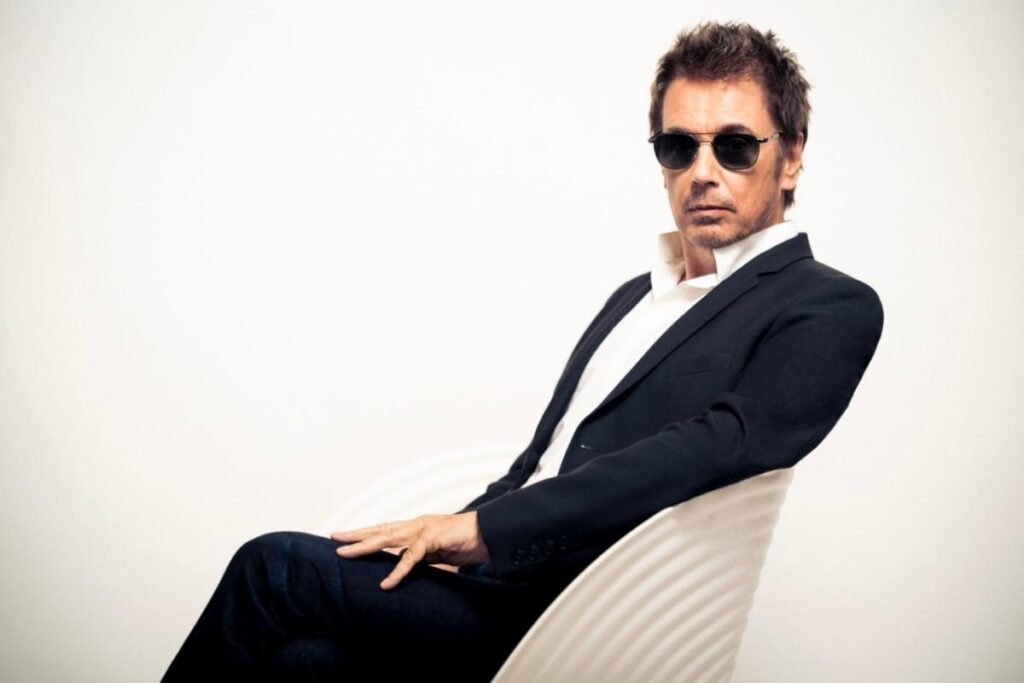
«No, Fix It.» Those three words — murmured to himself backstage after a lackluster calypso performance at a youth talent show — would steer Machel Montano’s four-decade journey.
While his contemporaries drifted from Caribbean sounds to foreign influences, the 9-year-old vowed to reignite soca’s allure. Today, with a record 22 significant monarch titles (the musical crowns of Trinidad, achieved through lyrical prowess, social commentary, and electrifying performances that reclaimed cultural pride), he’s evolved from star to soca’s protector — a cultural visionary expanding the genre’s reach.
«I could’ve never imagined this,» Montano reflects from his Port of Spain residence, his voice imbued with the wisdom of an artist who transitioned from youthful curiosity to a cultural institution.
His February 2025 album One Degree Hotter signifies a powerful comeback after a four-year sabbatical spent pursuing a Master’s in Carnival Studies — enhancing his understanding of the tradition he’s celebrated since childhood. «This album reflects our enriched knowledge,» he explains. «We’re still delivering road march hits and competition calypsos, but we recognize what needs to change to make soca global.»
Montano’s discography is a testament to soca’s growth. He was merely an eager 11-year-old when he unveiled «Too Young To Soca» in 1986; he broadened the genre’s scope with 1991’s international «Take Me Back«, and further revolutionized it with 1997’s «Big Truck» and 2015’s confident «Like Ah Boss.» His recent collaboration with Ne-Yo on «Truth & Balance (Remix)» showcases his ability to respect soca’s roots while incorporating international stars into its joy.
The statistics are impressive — numerous sold-out solo performances at Madison Square Garden (including two shows in one night), NPR’s Tiny Desk (a soca first), collaborations with Beyoncé, Jay-Z, and Major Lazer — yet Montano soberly notes that soca still lacks a dedicated GRAMMY category. «I’ll continue to lead the charge,» he states, «but true recognition might be realized by the next generation.»
Learn more: 5 Key Artists Shaping Contemporary Soca: Machel Montano, Patrice Roberts, Voice, Skinny Fabulous, Kes The Band
In a world driven by algorithmic hits, Montano stands as a reminder that true artistry isn’t about chasing trends, but about creating cultural legacies where the world willingly engages. In this GRAMMY.COM conversation, Machel Montano reflects on his career — not just as a performer, but as a devotee, treating each stage like sacred ground and each song as a spiritual endeavor.
The following has been edited for clarity and brevity.
I want you to talk about “Too Young To Soca.» Did you know what you were getting into? How does that experience resonate with you now?
I could’ve never envisioned this when I began in 1984 forming my band. I watched «Solid Gold,» seeing Sting, the Police, Guns N’ Roses, Michael Jackson, the Bee Gees, and Sade. I longed for that world but loved the technology more than the fame. I’d have happily played congas in the background.
Back when I did “Too Young To Soca,» the thrill was in just making music as a child, having fun, traveling, and performing. Now, I understand the responsibility and the discipline it demands. At times, it feels overwhelming trying to deliver chart-topping songs and ensure a successful Carnival season with big hits. There’s a sacredness to this work now. In 1986, it felt less sacred and more about excitement; but now, stepping to a microphone or into a studio, every act of writing and creating is a sacred space for me.
You were on «Star Search» shortly after «Too Young,» correct?
I think it was 1987; this was right after I gained attention with “Too Young To Soca.» In New York, I met Ralph MacDonald, a renowned Trinidadian percussionist who produced tracks on the Saturday Night Fever album. He and Marcus Miller thought I should go on «Star Search,» and they prepared me. I had the choice to sing either “Just The Two of Us” or “Too Young To Soca.» I practiced both, but ultimately felt more at ease performing soca.
Choosing soca and receiving a cold response from the audience — how did that shape your view of Caribbean music’s global reception?
Growing up, I learned calypso in school and from my parents. When performing soca music, I found myself in calypso tents with «Too Young To Soca» — I was the sole 9-year-old surrounded by 40, 50, and even 70-year-olds. I didn’t see any peers. We participated in younger competitions where everyone lip-synced New Edition, Bell Biv DeVoe, and reggae music. As I started singing calypso, the others looked at me as though I was out of place.
Feeling embarrassed and defeated backstage, I met my inner voice and reflected, What do I do? Something replied, No, fix it. That marked the start of my destiny. Since then, I’ve dedicated my life to encouraging young people to embrace their culture, blending soca calypso with hip-hop, R&B, and classical music.
Reaching «Star Search,» I recognized my duty to represent my music and my culture. While I loved «Just The Two Of Us,» it simply didn’t feel right. I performed «Too Young To Soca,» realizing the audience wasn’t familiar with it, and I knew I might not win. However, the real victory was participating. Future history books will show I performed soca on «Star Search» in 1988. You may lose some battles, but you can win the war if your vision aligns with listening to your inner voice.
In hindsight, do you wish you had performed that R&B song?
I carry no regrets. I’m incredibly thankful, starting each day with a sense of luck. Fame or winning a GRAMMY was never my drive; I focused on understanding how to integrate instruments into records, making them sound great, and mastering the technology. That remains my true priority.
There were times I thought, if I had opted for R&B, perhaps I would have become an R&B star. But at this reality, this is meant to be. I’ve always sought to push progress. When I got signed in Germany, I attempted that; it didn’t materialize. My contract with Atlantic Records in 2000 also didn’t pan out. But each experience taught me valuable lessons in the studio, gaining insights from working with Stargate in Norway, Merlin Music in Sweden, and premier artists in London.
I returned, applying those lessons to my industry, advancing the entire genre forward. I’ll keep leading this charge, though complete recognition for soca may come from the next generation. I always chose to represent my culture; while I may not have taken as many risks, I see it as following my heart.
How does your new album, One Degree Hotter, represent your current state as both an artist and a carnival scholar?
This album signifies that we possess deeper knowledge now. It’s a bridge connecting our past and future. It captures insight gained from formal education and my 40 years of experience while also understanding the origins of Carnival, calypso, soca, mas, and (steel) pan.
We’re exploring new themes and perspectives, incorporating retro styles by reviving ’80s and early ’90s drum machines. Tracks like «Pardy» have potential for international crossover. I’m consistently the artist known for experimentation, pushing boundaries. This album represents that balance. Our ultimate aim is the next album, which will fuse Garifuna music, along with Shatta, Bouyon, reggaeton, and afrobeats, to explore the connections between Africa’s Fela Kuti and contemporary stars like Wizkid and Burna Boy, further demonstrating why it resonates in the Caribbean. We’re one degree more aware, hotter, and closer to our goals.
While still producing road march hits and competition calypsos, we understand the necessary changes to promote soca globally. (One Degree Hotter) boasts several standout tracks, including a calypso record, a soca song for road march, a chutney that won the chutney soca monarch, and «The Truth,» which features collaborations with premier players in R&B and dancehall.
That leads me to my next question about «Truth.» How did you collaborate with Ne-yo for that track?
I sensed that the record’s message resonated with him, paralleling his overall life perspective. Musically, I find Ne-yo is a true genius, always delivering exceptional work. I observed him embracing Caribbean influences, collaborating with Shaggy, taking creative risks.
Our paths crossed when Ne-yo performed in Trinidad. Recently, I noticed him working with a rising Trinidadian artist named Sej. When I discovered the Ayetian song during Carnival titled «Balance,» which echoed my own song’s message about balance, the idea of creating a mashup sparked. I contacted Ne-yo’s manager and the producer, and soon they were onboard for this collaboration. During Carnival, our song was climbing the charts in Trinidad, making it the only dancehall track in the mix. It felt like a perfect match.
Did you encounter skepticism regarding pursuing a degree in Carnival studies while potentially pausing your music career?
During school, I was tasked with writing a calypso, which I executed and ultimately won the calypso monarch competition, making history as the only individual to have achieved what I did at that age. I believe the expertise gained from my studies played a significant role. Many have since enrolled in the carnival studies program, and I aim to inspire more people to deepen their understanding of their culture.
So, how many albums do you have in total?
I lost track after releasing an album (Album 34) about 5-10 years ago. I estimate around 49 or 50, but I can’t be sure. If you analyze the figures, my number of albums surpasses my years in the industry, as there have been instances with two releases in one year — one Machel Montano album alongside all the HD Family or D Mad Bull Crew albums that featured artists working with me.
At what age did it become routine to produce an album yearly? Please describe the soca season process from October to December, leading into Carnival and its duration from December to March.
Soca has a seasonal nature. It’s tied to the Carnival season, which heralds Lent. Traditionally, having a hit song each season has been expected. From an early age, I was told to never miss a year or risk being forgotten. Although I have missed some years and debunked that myth.
My first EP in 1986 with «Too Young To Soca» was financed by my parents. I went through a series of failures — flopped in ’87, ’88, ’89, and ’90. After releasing One Step Ahead, I knew I had to innovate. Inspired by Teddy Riley, we wrote «Take Me Back», which became a hit. I won the Young Kings competition, and decided to break away from the typical soca mold to explore crossover possibilities with «Come Dig It.»This process was about globalizing my music while anticipating the upcoming Carnival period.
Watching artists like Usher take 3-4 years to record an album led me to ponder the benefits of a similar approach for soca. However, we didn’t share the same platform. Thus, I remained focused on tradition while striving to innovate. I understood the necessity of annual albums as part of my strategy. No one else has managed such a prolific output. Input equals output.
I have a question about “Take Me Back,” which is a calypso. What distinguished it from the unsuccessful soca music you initially produced?
The key difference was my desire to collaborate with the best. As a child, I started working with top soca and calypso producers like Leston Paul. Following him, I collaborated with Pelham Goddard in ’88, and the following years, I worked with Frankie McIntosh, a leading figure in Bed-Stuy.
However, I grew disillusioned with my sound, perceiving it as outdated and overly mature for my youthful spirit. In 1991, with “Take Me Back,» I took control and produced the track myself alongside my band. I incorporated vintage drum sounds and a Casio FZ-1 sampler, which I learned about through Teddy Riley. I purchased it with my earnings, combining that with the writer of “Too Young To Soca.» Thus, «Take Me Back» emerged as a unique mix, integrating funk, blues, and samples inspired by nature. No one was creating like this, so the major difference was taking that leap to produce my own album.
Awards and competitions are synonymous with the soca lifestyle and your career, but in 2015, you stepped back from competitions. How many awards and titles have you amassed thus far?
We recently recalibrated the numbers, as a newspaper mistakenly reported that Mighty Sparrow had 18 titles while I had 19. They overlooked the Junior Calypso Monarch, Young Kings, and two Groovy Soca Monarch competitions, elevating my count to 22 significant titles.
You’re the only soca artist to have sold out Madison Square Garden twice in a single night, having first performed there at age 9. What has your journey there been like, from youth to sold-out shows decades later?
I won the National Junior Calypso competition in 1984, earning me immediate recognition. A man from NYC approached my school, inviting me to open for the Mighty Sparrow and Lord Kitchener at MSG; I accepted.
Finding myself there was a realization I never anticipated, and I likely didn’t grasp the enormity of it at the time. I have a photo of myself being lifted by legendary calypsonians: The Mighty Sparrow, The Lord Kitchener, and Mighty Shadow — at that time, I was the only child. I was shy and uncomfortable performing for large crowds. Yet I believe that marked the inception of my spiritual journey, as I had to connect with something within to step onto that stage. It was intimidating yet exhilarating.
I recall earning $1600 for that performance, which I promptly used to buy a Yamaha DX7, an instrument all the «Solid Gold» bands were using. To complete the circle from then to now, filling that same arena as a household soca icon with my band was surreal, happening around 2007. Being able to fill that venue twice in one night stands as one of the highlights of my career.
You’ve collaborated with major artists like Beyoncé, Jay-Z, Major Lazer, Sean Paul, Shaggy, Ashanti, Rihanna, and more. What’s a lesson you’ve learned from them that resonates with you?
I discerned a common thread — the principle that you reap what you sow. While recording with Ashanti, she placed her trust in me as the leader. She stood by the microphone for hours, hardly taking breaks — asking questions like, “How do I perform this? Is this adequate? Let me try that again.”
In working with Beyoncé, I admired her artistry and dedication. This deep commitment often separates fleeting artists from those who last. Many who achieve longevity prioritize collaboration and openness. Someone like Pitbull embodies loyalty and gratitude for shared experiences. Within the art lies a level of sanctity that connects us.
I am wholly committed to hard work. I can remain in the studio for two consecutive days without eating or leaving. The sacredness of the craft allows one to disconnect from everything else to realize a song’s full potential. Observing the dedication of the greats in those moments is a rare privilege.
Recording is often an unseen process. «It’s Carnival» with Destra remains a monumental track and one of the largest road march anthems, lasting over 20 years. What’s the key to creating a timeless classic?
I appreciate the notion of a recipe, as it involves selecting the right ingredients. One crucial lesson I’ve learned about flavorful food is that starting with excellent ingredients yields better results. Hence, talented individuals must come together for a song.
For instance, «It’s Carnival» was penned by Kernel Roberts, son of Lord Kitchener, a drummer turned master songwriter. Recently, it was voted the top soca song of the 20th century by Scorch Radio. The perfect blend of melody, lyrics, and stellar production brings a song to life.
The feelings invoked by music are paramount. I recall hearing Sparrow sing «Don’t Back Back On Me.» That song transports me back to the ’80s emotionally. In those moments, when this music plays, we transcend physical boundaries. It’s about connecting spiritually, transcending limitations of height, weight, and depth. Crafting a remarkable song is about evoking emotions that take you back to specific moments in time.
Beyond immediate accolades, what lasting impact do you aspire to achieve through your artistry?
I aim to leave an essence that resonates with those who experience it. I cherish the moments when individuals feel and comprehend my being — through my music, words, presence, or touch. I am entirely committed to my existence, striving constantly to embody love in its truest, most intense form.
Celebrating Black Music Month
Fuente original: grammy.com
Publicado originalmente el 2022-12-08 15:53:00 por
Hashtags sugeridos: #Living #Legends #Electronic #Music #Pioneer #JeanMichel #Jarres #50Year #Odyssey #Audio #Experimentation